Sports · Top Story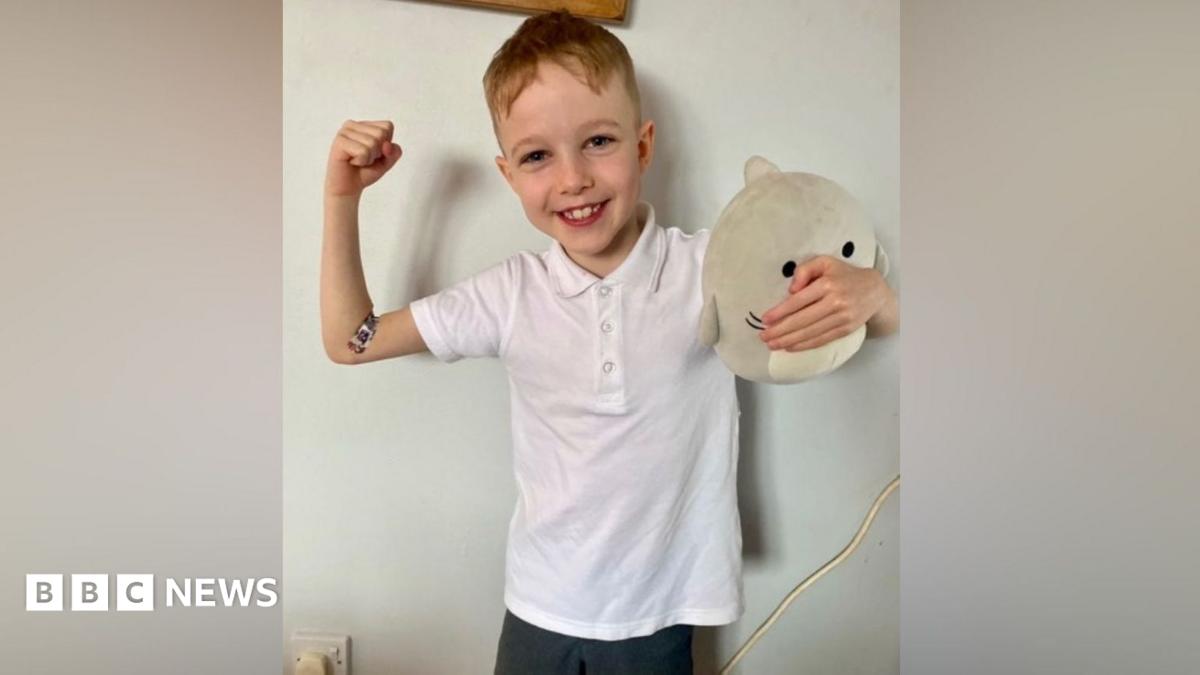
"We thought it was just growing pains but we knew there was something wrong when it stopped him playing football." When Alfie, then aged seven, began to limp his parents, and initially his GP, believed it was a normal part of his childhood. But when the problem did not clear up, he underwent a series of tests, which diagnosed juvenile idiopathic arthritis (JIA). Now nine, Alfie is back playing his beloved sports but his mother, Laura, said: "It's a bit of an invisible disease and not many people know about it - so keep asking those questions." The family, from Keyworth in Nottinghamshire, said the first symptoms were soreness in his legs.
"We thought it was just a knock on the knee but it didn't go away," Laura said. "So we had lots of back to the hospital, to and fro and that's when they told us - and it was something we had never heard of." Alfie then spent time in and out of hospital, using crutches to get about, and developed swelling in his fingers that stopped him doing everyday activities, as well as pain in his ankles and jaw. The eventual diagnosis of juvenile arthritis in March took the family by surprise and only came after repeated visits to the hospital.
Alfie said: "It made me a little scared because I didn't want to have any diseases and I hadn't been to hospital much before. "It makes me feel very happy that the medicine is working and I don't have to go to the hospital so much." Alfie now takes daily medication and visits hospital every few months. His treatment has been supported by his favourite team Notts County and he was invited to become a matchday mascot, an experience he described as "really fun".
JIA affects about one in 1,600 children in the UK, with about 10 new diagnoses every week, the Juvenile Arthritis Research charity said. While there are effective treatments, there is no cure, and delays in diagnosis can lead to permanent joint damage and, in some cases, sight loss. Laura said: "It's about awareness.
If your child is complaining of aches and pains, don't always assume it is growing pains or a knock. "Alfie has proved its nothing to be scared of, he's been very brave, very determined. "It's not stopping him doing the things that he want to do.
"It's a bit of an invisible disease and not many people know about it - so keep asking those questions."
Source: BBC